


Fresh raw beef ingredient solution for moisture retention applications
Solutions 02 — Beverage Ingredient Solutions — joyful healthy beverage toast
Happy border collie and orange cat playing beside distinct animal nutrition feed bowls in a mountain meadow
Purple blue and magenta beneficial microorganisms in a luminous microbiome research environment
Golden grain harvest with combine harvester representing large-scale grain processing supply
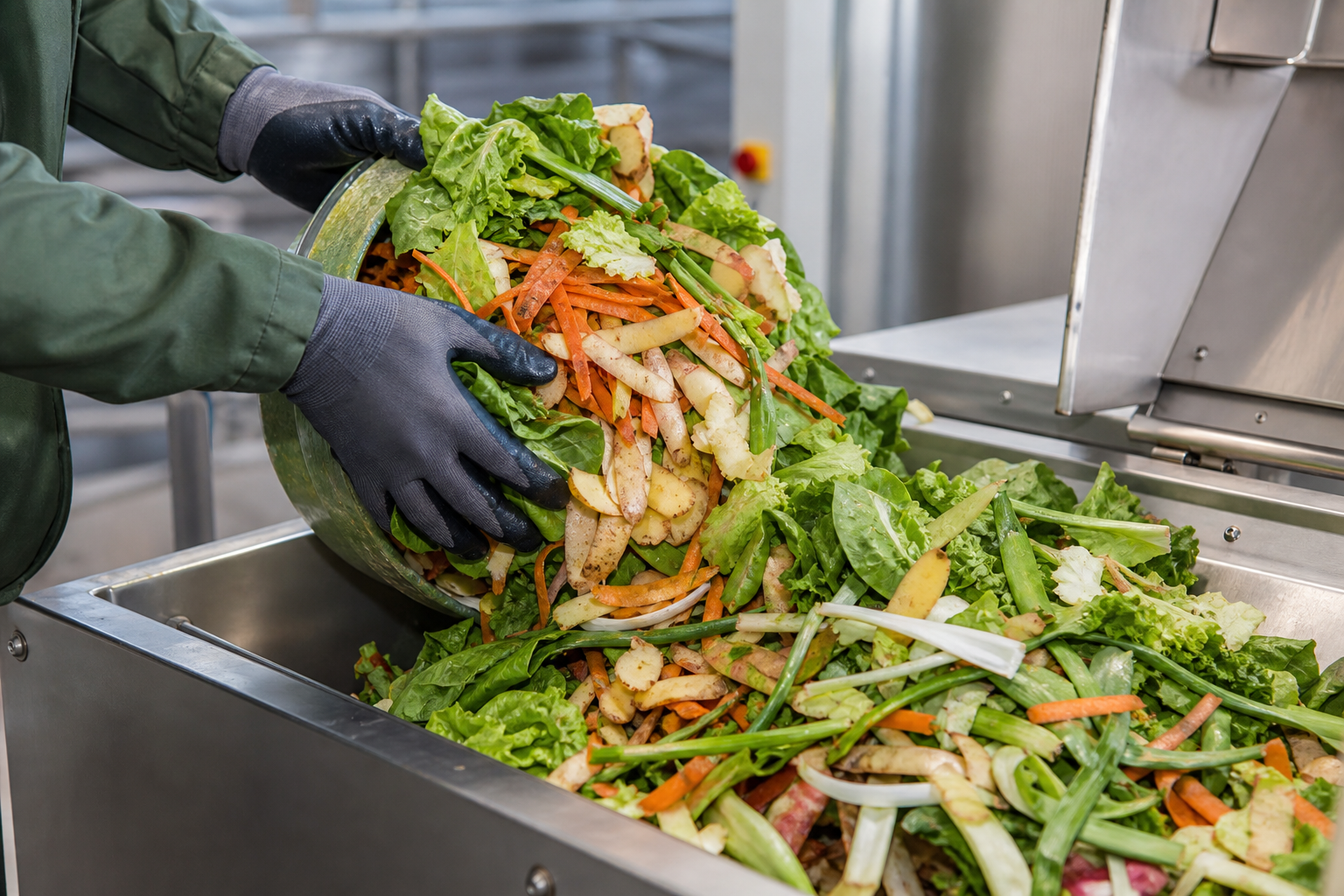
Source-separated kitchen food waste entering stainless steel biological degradation equipment

Clean-label bakery preservation

Whey Fermentate Powder for Bakery Mold Control

A fermentation-derived preservation tool for bread, buns, tortillas, cakes, and pastries. FoodApex combines application screening with challenge testing so technical teams can assess mold control without treating shelf life as a single-ingredient promise.

Application: Bakery & PastryDocument: Technical StudyReview: FoodApex R&D Team
Industrial bakery products used for clean-label preservation trials

The production problem is bigger than mold alone

Clean-label reformulation can change dough behavior, flavor, pH, proofing, packaging tolerance, and the point at which spoilage becomes commercially unacceptable. The right question is not whether an ingredient sounds natural. It is whether the complete product and process remain controlled.

01 / Risk

Premature mold

Visible growth can trigger waste, returns, complaints, and lost distribution confidence.

02 / Label

Recognizable ingredients

Teams may want a fermentation-derived pathway while preserving clear, market-appropriate labeling.

03 / Sensory

Flavor and texture

Acidification and cultured ingredients must be evaluated against yeast activity, crumb, aroma, and taste.

04 / Scale

Batch consistency

A bench result must survive production variability, cooling, slicing, packaging, and distribution.

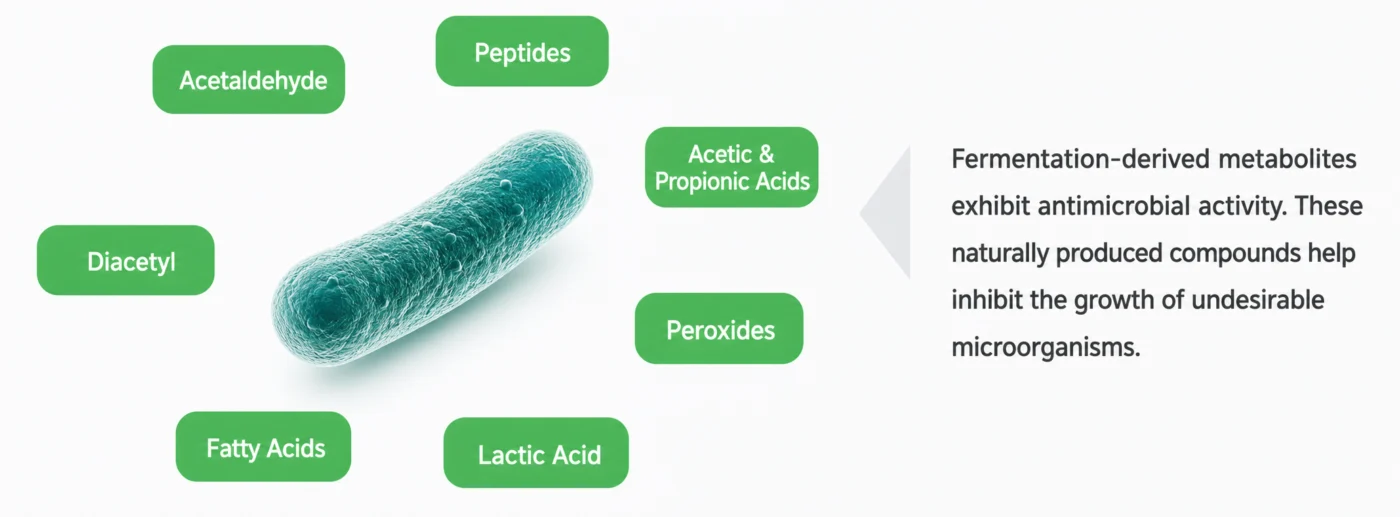
Diagram of organic acids, bacteriocins, and fermentation metabolites supporting preservation
Conceptual mechanism map based on the FoodApex technical file. It is not a quantitative contribution analysis.

How it works

Multiple fermentation metabolites, one preservation hurdle system

Organic acids

Fermentation-derived acids can lower environmental suitability for susceptible spoilage organisms. Their practical effect depends on pH, buffering, and the finished food matrix.

Bacteriocin-like peptides

Selected cultures may generate inhibitory peptides that contribute to a broader antimicrobial environment.

Low molecular weight metabolites

Other fermentation products may complement acid and peptide effects, creating several hurdles rather than relying on one mechanism.

Applications built around the finished product

FoodApex screens the preservation system against the bakery format, process, package, and distribution target. A soft sliced loaf, a high-moisture tortilla, and a filled pastry do not share the same risk profile.

Bread

Sliced and pan bread

Evaluate mold onset, loaf volume, crumb softness, slicing, and package conditions.

Buns

Rolls and buns

Balance shelf-life targets with fermentation rate, softness, and flavor.

Tortillas

Flatbreads and tortillas

Consider water activity, surface exposure, package atmosphere, and flexibility.

Pastry

Cakes and pastries

Review leavening system, inclusions, fillings, moisture migration, and sensory limits.

Bread challenge comparison showing untreated control and whey fermentate treatment on Days 3, 5, and 7
FoodApex internal screening image. Results apply only to the stated bread challenge conditions.

What the data shows

A delayed visible mold signal under one defined bread challenge

Day 7

First visible mold in the treated group

The untreated control showed visible mold on Day 3. The bread containing 0.3% whey fermentate powder showed visible mold on Day 7 under the stated accelerated conditions.

Conditions: 30°C, 60% RH, 8 days, Penicillium challenge at approximately 10² to 10³ CFU/mL. The treated group also showed more than a 2 log reduction in aerobic plate count in this study.

Evidence boundary: 0.3% is the test level used in this specific internal screening study. It is not a universal recommendation, guaranteed shelf-life claim, or one-for-one replacement instruction.
FoodApex bakery application laboratory with commercial baking equipment
FoodApex bakery application laboratory. Commercial validation should reproduce the intended plant process and packaging system.

Commercial validation

Move from a promising screen to a controlled factory trial

01

Baseline

Document current formula, process, hygiene, package, pH, water activity, and failure mode.

02

Dosage gradient

Compare a control and several technically justified levels instead of guessing one dose.

03

Challenge and sensory

Track microbiology together with dough handling, yeast activity, flavor, volume, crumb, and texture.

04

Scale-up

Confirm the selected system on the production line and across multiple batches.

Regulatory and allergen review belongs in the development plan

Ingredient legality, labeling, clean-label acceptance, and use conditions differ by country and application. FoodApex supplies technical documentation, but the manufacturer remains responsible for the finished product and destination-market assessment.

Milk allergen

Whey is milk-derived. In the United States and many other markets, a milk allergen declaration may be required. Review the supplier specification, ingredient statement, and cross-contact controls.

Safety status and claims

Do not interpret the safety history of individual production cultures as a blanket regulatory approval for every finished ingredient or use. Confirm identity, manufacturing controls, dosage, and intended market before launch.

Frequently asked questions

Practical answers for R&D, quality, regulatory, and procurement teams considering a cultured whey preservation pathway.

What is whey fermentate powder?

Whey fermentate powder is a dried fermentation-derived ingredient made by culturing whey-based nutrients with selected food microorganisms. The resulting organic acids, bacteriocin-like peptides, and other metabolites can contribute to mold-control systems in bakery products.

Is 0.3% the recommended dosage for every bakery formula?

No. The 0.3% figure belongs only to the FoodApex bread challenge described on this page. Commercial dosage must be established for the product matrix, pH, water activity, packaging, process hygiene, target shelf life, and destination market.

Can whey fermentate replace calcium propionate one-for-one?

Not automatically. The active composition, buffering, dough conditions, process, and microbial pressure differ. A controlled side-by-side trial is required before making a substitution decision.

Does whey fermentate require a milk allergen declaration?

Whey is derived from milk. In the United States and many other markets, the finished product label may require milk allergen disclosure. Confirm the exact ingredient statement and local rules with regulatory counsel.

Will it affect yeast activity, flavor, texture, or pH?

It can, depending on dosage and formulation. Measure dough fermentation, pH, volume, crumb, flavor, and texture during the same shelf-life study rather than evaluating mold control alone.

Build a bakery trial around your real production conditions

Share your formula, process, packaging, target shelf life, and destination market with the FoodApex technical team.

Request a technical trial