



Technical Guide · Bakery & Pastry
Clean Label Mold Inhibitors for Baking: A Technical Guide to Whey Fermentate Powder
Direct answer: Whey fermentate powder is a cultured, milk-derived ingredient whose organic acids, inhibitory peptides, and other metabolites can help delay mold in bakery products. It is not a magic dust for shelf life, sadly. Performance must be validated against the actual formula, process, packaging, hygiene, sensory targets, and destination-market labeling rules.
What Is Whey Fermentate Powder?
Whey fermentate powder is made by fermenting whey-based nutrients with selected food microorganisms, then converting the fermentation output into a dry ingredient. The Apex Biotech technical file describes glucose, whey powder, and yeast extract fermented with Propionibacterium freudenreichii subsp. shermanii and Lactiplantibacillus plantarum. The process generates a mixture of organic acids, bacteriocin-like peptides, and lower molecular weight metabolites.
This is not ordinary whey protein. Buyers should evaluate the specification, microbial limits, allergen status, batch consistency, and application data.
Why Mold Control Becomes Difficult in Clean-Label Bakery Formulations
Removing a familiar inhibitor changes more than the label. Bread pH, buffering, yeast fermentation, hygiene, slicing, packaging, water activity, and distribution temperature all influence visible mold.
A clean-label replacement project therefore needs a hurdle approach. Formulation is one hurdle. Sanitation, cooling, packaging, and inventory control are others. Expecting one cultured ingredient to compensate for uncontrolled condensation or a contaminated slicer is like asking a seat belt to repair the brakes. Useful tool, wrong job.
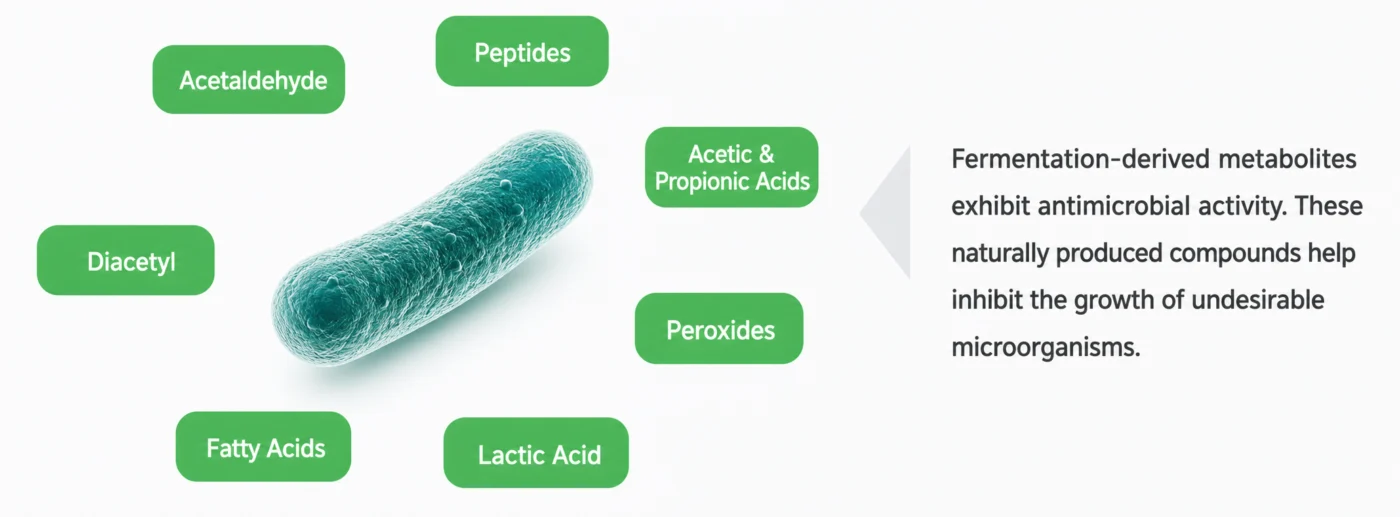
How Fermentation Metabolites Create Multiple Preservation Hurdles
Organic acids can reduce suitability for susceptible molds when acid profile and pH work together. Inhibitory peptides and other metabolites may add complementary hurdles, but bakery matrices will not respond identically.
High buffering, contaminated inclusions, moisture pockets, or trapped condensation can erase a formulation advantage. Measure pH and water activity in the finished product.
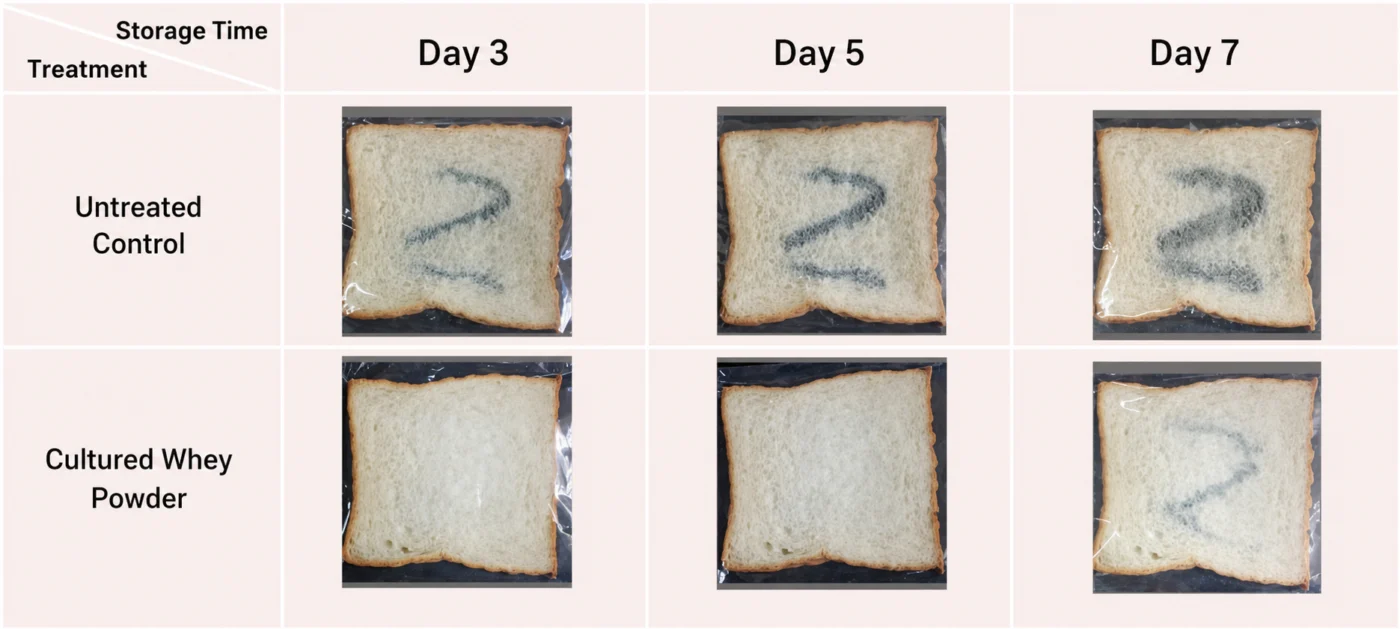
What the Apex Biotech Bakery Challenge Study Shows
In the Apex Biotech technical file, bread containing 0.3% whey fermentate powder was compared with an untreated control. Samples were challenged with Penicillium at approximately 10² to 10³ CFU/mL and held for eight days at 30°C and 60% relative humidity. Visible mold appeared in the control on Day 3 and in the treated group on Day 7. The treated group also showed more than a 2 log reduction in aerobic plate count under these conditions.
The 0.3% level is not a universal recommendation, and the result does not guarantee five extra days elsewhere. It supports product-specific validation.
Whey Fermentate vs. Calcium Propionate, Vinegar, Cultured Wheat, and Natamycin
| Option | Primary role | Development considerations |
|---|---|---|
| Whey fermentate | Multiple fermentation-derived metabolites | Milk allergen review, supplier standardization, sensory and dough validation |
| Calcium propionate | Established propionate mold inhibition | Effective benchmark; label strategy and yeast sensitivity may shape use |
| Vinegar or buffered vinegar | Acetic-acid-based hurdle | Flavor, pH, buffering, and dose can limit formulation freedom |
| Cultured wheat | Fermentation-derived acids and metabolites | Wheat allergen or gluten considerations, formulation-dependent activity |
| Natamycin | Potent antifungal surface treatment in permitted uses | Application method and market-specific regulatory limits require review |
Do not treat these systems as numerically interchangeable. Compare them in the same dough, process, package, and challenge design.
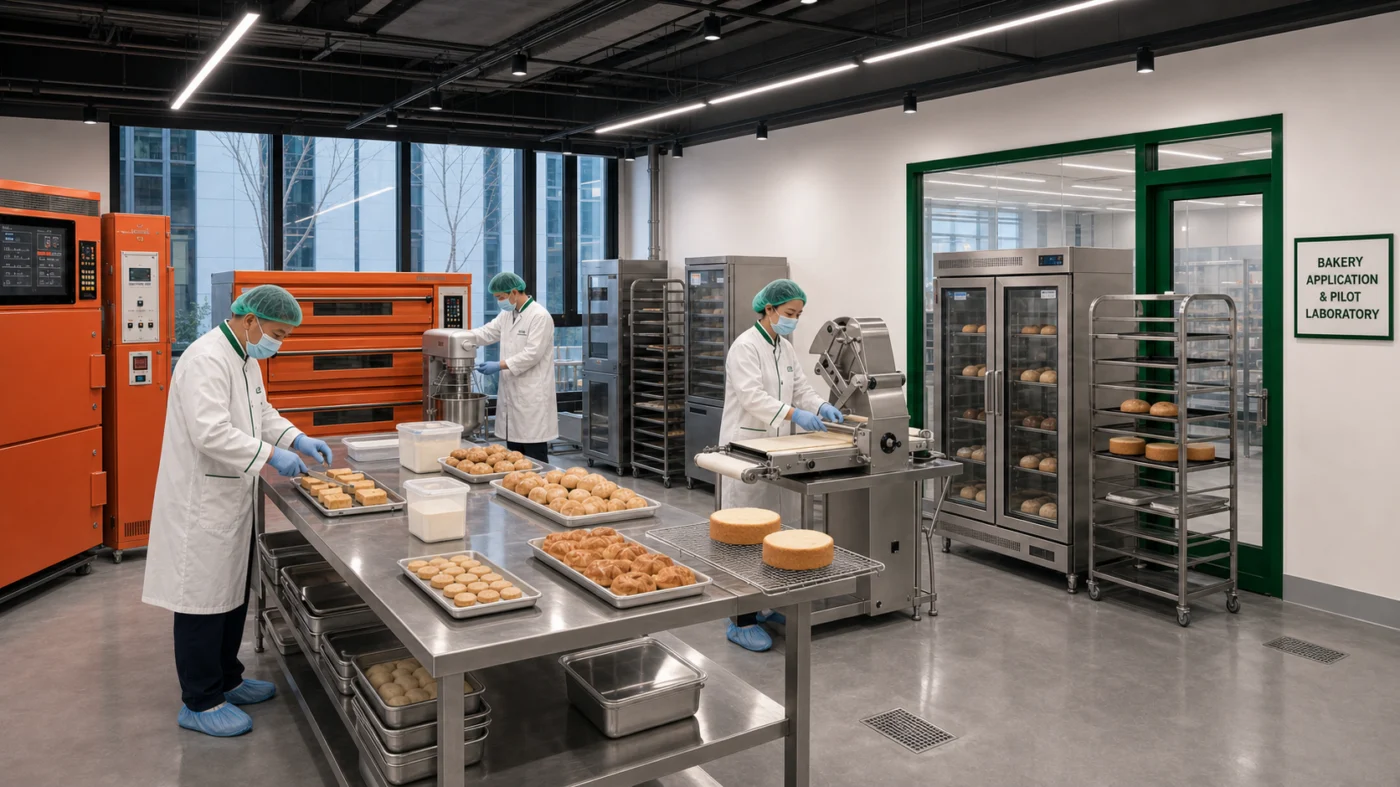
How to Run a Commercial Bakery Trial
- Define the baseline. Record formula, process times, temperatures, dough pH, finished-product pH, water activity, hygiene controls, packaging, target shelf life, and current failure mode.
- Create a dosage gradient. Include an untreated control, the current benchmark, and several technically justified whey fermentate levels. The spacing should be wide enough to reveal a response.
- Use representative production. Reproduce mixing energy, fermentation, bake profile, cooling, slicing, and packaging. A laboratory loaf can screen ideas, but commercial equipment introduces different contamination and moisture patterns.
- Plan microbiology and sensory together. Set sampling days before the study begins. Record visible mold, counts where appropriate, pH, water activity, volume, crumb firmness, aroma, taste, and consumer-relevant defects.
- Confirm at scale. Repeat the selected system over multiple batches and realistic distribution conditions before changing specifications or claims.
Effects on Dough, Yeast Activity, Flavor, Texture, and pH
Fermentation-derived ingredients may alter yeast activity, proof time, volume, color, flavor, and crumb. Measure pH, acidity, water activity, volume, texture, and microbial counts, then pair them with trained sensory assessment. Target a repeatable balance rather than the largest dose.
Labeling, Milk Allergen, and Regulatory Considerations
Whey is milk-derived. FDA guidance gives “whey (milk)” as an ingredient-list example. Confirm supplier composition, processing aids, cross-contact controls, and labeling for each market.
Clean label is not one harmonized legal category. Avoid chemical-free, guaranteed shelf-life, and universal replacement claims. Culture safety history does not automatically establish the regulatory status of every fermentate or use.
Formulation Decision Checklist
- Is the main failure visible mold, yeast, rope, another spoilage organism, or a process hygiene issue?
- What are the product pH, titratable acidity, water activity, and buffering capacity?
- Does the target market accept the proposed ingredient name and milk allergen statement?
- Will the package and cooling process control condensation and post-bake contamination?
- What benchmark and dosage range will make the comparison commercially meaningful?
- Which sensory and production limits are non-negotiable?
- How many batches and distribution conditions are needed before specification approval?
Frequently Asked Questions
What is cultured whey powder?
Cultured whey powder is produced by fermenting whey-based nutrients with selected microorganisms and drying the resulting ingredient. It contains fermentation metabolites such as organic acids and may support mold-control systems in bakery foods.
How does cultured whey inhibit mold in bread?
Its fermentation-derived acids and other metabolites create several microbial hurdles. Performance still depends on pH, water activity, package conditions, hygiene, organism pressure, and the complete formula.
Is cultured whey considered a clean-label preservative?
It is commonly evaluated as a fermentation-derived clean-label option, but clean label has no single universal legal definition. Ingredient naming and consumer acceptance must be reviewed for each destination market.
How much whey fermentate powder should be used in bread?
There is no universal dosage. Apex Biotech tested 0.3% in one defined bread challenge, but commercial use must be established with a dosage gradient in the actual product and process.
Does cultured whey contain a milk allergen?
Whey is milk-derived. In the United States and many other markets, the finished product may require milk allergen disclosure. Confirm the supplier specification and local labeling rules.
Can it replace calcium propionate one-for-one?
Do not assume a one-for-one replacement. Compare the systems in a controlled trial because acid profile, buffering, sensory impact, dough performance, and mold pressure differ.
Can it affect yeast fermentation, flavor, or texture?
Yes. The direction and size of the effect are formulation-dependent, so fermentation rate, volume, crumb, pH, flavor, and texture should be assessed alongside microbiology.
How should a bakery shelf-life challenge test be designed?
Use a defined control, justified dosage levels, representative packaging, documented inoculum or environmental exposure, sufficient replicates, planned sampling points, microbiological counts, visible-mold scoring, and sensory measurements.