


Technical Guide | Bakery & Pastry
Fungal Alpha-Amylase in Baking: A Technical Guide to Flour Correction, Fermentation, and Crumb Quality
Direct answer: Fungal alpha-amylase in baking cleaves internal starch bonds to create shorter dextrins and fermentable sugars. Used carefully, it can correct low flour activity and support fermentation, loaf volume, crust color, and crumb uniformity. The right level is not universal. It must be established from the enzyme COA, flour activity, formula, and plant trial.
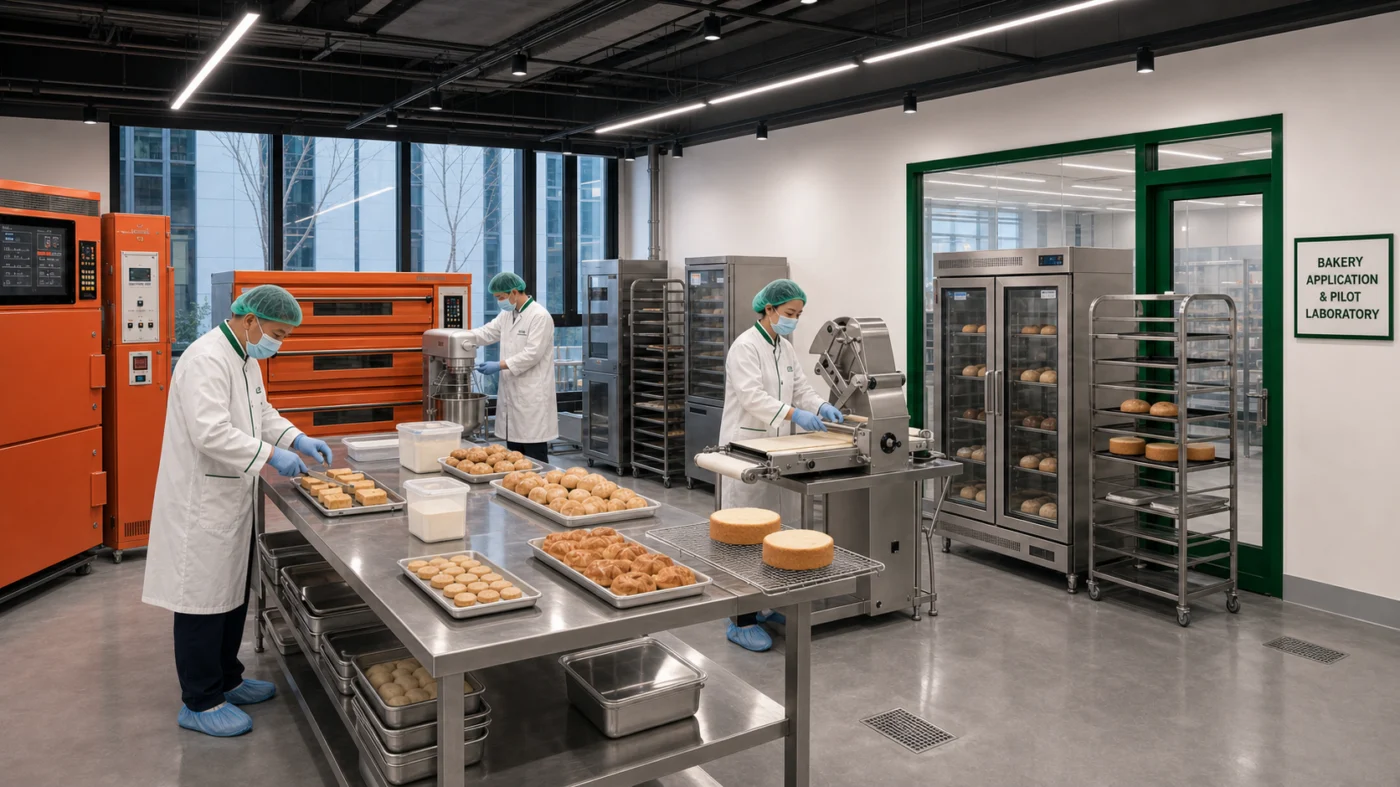
What Fungal Alpha-Amylase Does in Dough
Fungal alpha-amylase is an endo-acting enzyme. It cuts internal alpha-1,4 bonds in accessible starch, producing shorter dextrins and sugars that yeast and browning reactions can use. In practical breadmaking, the objective is controlled correction, not maximum starch breakdown.
When flour activity is low, a suitable grade can support proof response, oven spring, loaf volume, crust tone, and a more uniform crumb. Results depend on starch damage, protein quality, water absorption, dough pH, sugar and malt, fermentation time, and the enzyme’s activity method.
Why Flour Variability Changes Enzyme Requirements
Two flours with similar protein can behave differently because native amylase, sprout damage, damaged starch, extraction rate, and buffering differ. Falling number or another validated amylolytic index is useful, but it should be read with dough and baking data. A low falling number indicates high native activity and raises the risk of overcorrection.
Do not copy a dosage from another supplier or flour lot. Activity units are assay-specific, so a unit stated at one pH, temperature, and substrate cannot be converted directly into a universal addition rate.
Bread, Buns, Pastries and Flour-Correction Applications
Pan bread and buns are the clearest fit when the goal is stable fermentation, volume, color, and crumb cells. Sweet dough and pastry systems require additional caution because sugar, fat, malt, and longer proofing change substrate access and browning. Millers can use fungal alpha-amylase as part of flour correction, but the release specification should connect flour testing to a defined baking response.

Activity, pH, Temperature and Heat Sensitivity
The supplied reference sheet describes an Aspergillus oryzae enzyme with a reference pH range of 4.0-6.5, optimum pH of 4.5-5.5, reference temperature range of 35-65 C, and optimum of 45-55 C. These are third-party reference specifications, not Apex Biotech batch data. Confirm the offered grade and COA.
Fungal and bacterial alpha-amylases can differ substantially in thermal behavior. Many bacterial grades remain active later in baking, which can increase gumminess risk if the system is not designed for that profile. Source alone is not enough. Review the production strain, assay, substrate, intended use, and deactivation behavior.

How to Set a Trial Dosage
Start with an untreated control and the current plant benchmark. Use one flour lot and hold mixing, fermentation, proofing, baking, cooling, and slicing constant. Calculate several low-to-high activity treatments from the COA. The levels should be far enough apart to reveal a response without crossing a known safety or quality boundary.
Measure proof time, handling tolerance, specific volume, crust color, crumb cells, firmness, stickiness, and sliceability. Repeat the selected treatment across flour lots and production batches before setting a specification. A published ppm range can inform screening, but it cannot replace this calculation.
Interactions with Lipase, Xylanase, Glucose Oxidase and Emulsifiers
Alpha-amylase changes starch and sugar availability. Lipase changes flour lipids and gas-cell interfaces. Xylanase changes water distribution, while glucose oxidase can strengthen the dough network. Emulsifiers add another gas-retention and crumb variable. Optimize the system together because individual maximums can conflict.

Overdosing Risks: Sticky Crumb, Excess Color and Dough Weakness
Too much amylolysis can create wet or gummy crumb, large voids, excessive color, weak mechanical strength, poor slicing, or an unbalanced fermentation profile. A higher volume result is not acceptable if the crumb fails after cooling or storage. Evaluate the loaf after the full setting period, not only at oven exit.
Plant Trial and Quality-Control Checklist
- Record flour lot, falling number or equivalent activity index, damaged starch, protein, and water absorption.
- Confirm the product activity method and batch COA.
- Use untreated and current-standard controls.
- Hold process conditions constant and document deviations.
- Define acceptance limits before the trial.
- Repeat across representative production batches.
Regulatory, Processing-Aid and Dust-Handling Considerations
Food-enzyme status is preparation, use, and market specific. The U.S. standardized flour provision includes alpha-amylase from Aspergillus oryzae, while FDA and EFSA evaluations address specific preparations and intended uses. Confirm the offered production strain, purity, allergen or sensitization information, labeling position, and destination-market authorization. Powdered enzyme preparations should be handled to avoid inhalable dust.
Frequently Asked Questions
What does fungal alpha-amylase do in bread?
It cleaves internal alpha-1,4 starch bonds to form shorter dextrins and fermentable sugars. In a controlled system this can support fermentation, loaf volume, crust color, and crumb uniformity.
How much alpha-amylase should be added to bread?
There is no universal addition rate. Set a low-to-high activity gradient from the offered product COA, native flour activity, formula, and production conditions.
What happens if too much amylase is added to dough?
Excessive starch hydrolysis can cause sticky or gummy crumb, excessive crust color, weakened dough tolerance, poor slicing, or an imbalanced fermentation profile.
Is fungal alpha-amylase safe for food use?
Safety and authorization are enzyme-preparation and use specific. Verify the production strain, food-grade dossier, intended use, destination-market status, and safe dust handling before commercial use.
What is the difference between fungal and bacterial alpha-amylase?
Fungal and bacterial enzymes differ by source, activity profile, thermal behavior, pH response, substrate access, and intended use. Bacterial grades are often more heat tolerant, so they require separate bakery risk assessment.
Does alpha-amylase improve bread shelf life?
Some amylase systems can slow firming and support crumb softness, but the effect is grade-specific. Fungal alpha-amylase should not be treated as a mold preservative, and any shelf-life claim requires a defined storage study.